Cable trays form an important part of electrical infrastructure in factories, commercial buildings, data facilities, warehouses, institutional projects, and process plants. They provide an organised pathway for routing power, control, instrumentation, and communication cables while making future inspection and maintenance more manageable.
When evaluating a Cable Tray Manufacturer in Pune, project teams should look beyond tray dimensions and initial pricing. Material selection, load requirements, installation conditions, corrosion exposure, support spacing, and project drawings can all influence the suitability of a cable management system.
Start With the Installation Environment
An indoor commercial installation has different requirements from an outdoor industrial facility exposed to moisture, dust, chemicals, or changing weather.
Before finalising a tray, buyers should establish:
- Whether installation is indoor or outdoor
- Expected cable load
- Required tray width and depth
- Type and quantity of cables
- Support spacing
- Corrosion exposure
- Ventilation requirements
- Routing complexity
- Future cable expansion requirements
This information makes it easier to select a configuration that fits the actual project rather than relying on a standard tray for every application.
Understand the Available Cable Tray Types
Different tray designs serve different purposes.
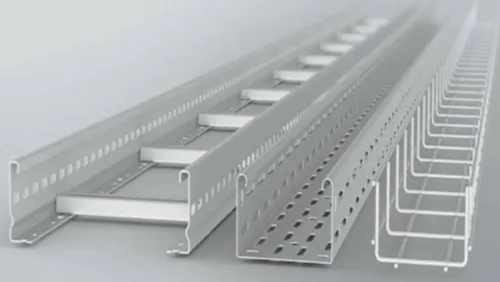
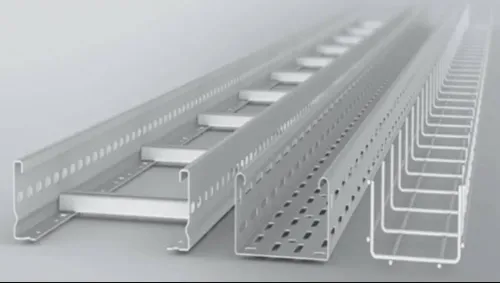
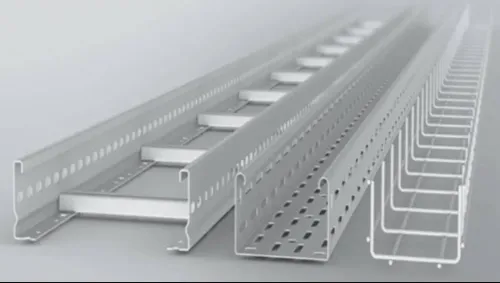
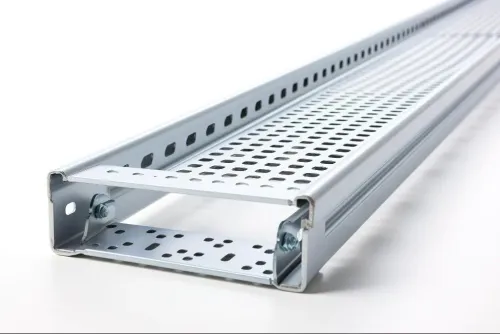
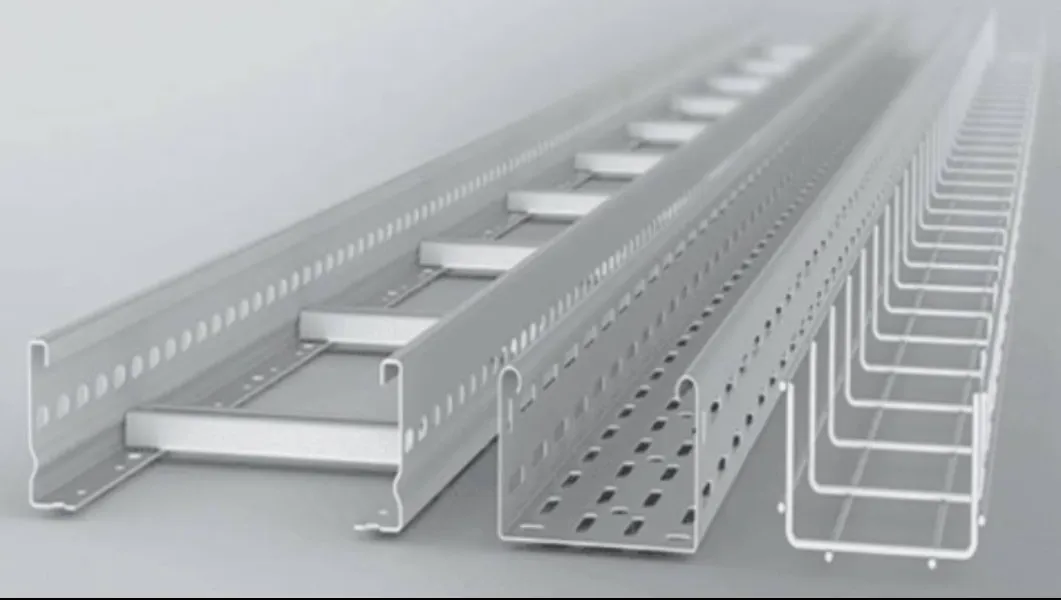
Perforated cable trays provide cable support while allowing ventilation and convenient routing. They are commonly considered for power and control cable installations.
Ladder cable trays use longitudinal side rails with transverse rungs. Their open construction can be useful for heavier cable routes and installations where ventilation and cable access are important.
Project requirements may also call for covers, bends, tees, reducers, couplers, vertical bends, and other accessories. These components should be considered during planning because cable routes rarely consist of straight sections alone.
Material and Surface Protection Matter
Cable tray performance depends partly on the material and finish selected for the operating environment. Depending on project specifications, applications may require suitable steel construction and protective surface treatment.
The objective is not simply to choose the most substantial option available. Buyers should select materials and finishes according to environmental exposure, engineering specifications, lifecycle expectations, and applicable project requirements.
Manufacturing Consistency Supports Better Installation
Dimensional consistency becomes particularly important when numerous tray sections and accessories are assembled across a large facility. Poor alignment can create additional work for installation teams.
For projects across Pune and Maharashtra, working with a manufacturer that can understand drawings, required dimensions, quantities, accessories, and delivery schedules can simplify procurement.
Electrotech Industries serves cable management requirements where project-specific coordination and manufacturing are important considerations.
A well-planned cable tray system should ultimately make cable routing safer, cleaner, easier to inspect, and more adaptable to future electrical changes. For procurement teams, the right starting point is therefore a detailed project requirement rather than a price comparison alone.
Keywords