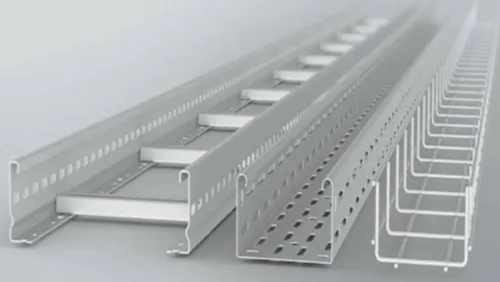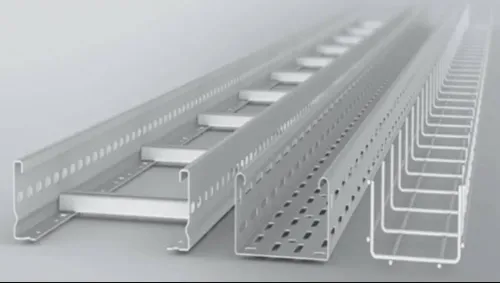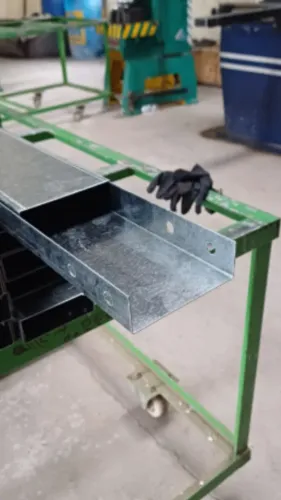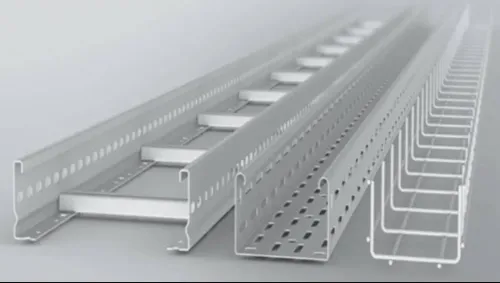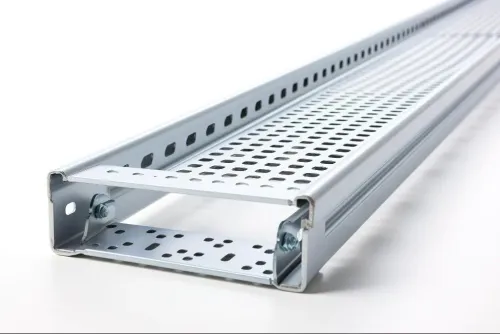

Standard cable trays are suitable for many electrical routes, but they may not provide adequate support for high cable loads, longer spans or demanding industrial environments. A heavy-duty cable tray manufacturer in Pune can develop stronger systems for power plants, factories, processing facilities, warehouses and infrastructure projects.
What Makes a Cable Tray Heavy-Duty?
A heavy-duty tray is not defined by thickness alone. Its overall performance depends on material grade, side-rail design, tray depth, rung or base construction, joint strength and support spacing.
Applications Requiring Greater Strength
Heavy-duty systems are commonly considered when large power cables must travel over extended routes or when maintenance conditions make frequent support placement difficult.
Typical situations include:
- Main power distribution routes carrying multiple large-diameter cables
- Industrial installations exposed to vibration, dust or mechanical activity
- Long spans where tray deflection must remain controlled
- Projects requiring extra capacity for planned electrical expansion
Load Assessment Comes First
The combined weight of existing and future cables should be calculated before selecting a tray. Covers, dividers and other attachments may add further load. Concentrated loads caused by improper cable placement should also be avoided.
Support Design Matters
A strong tray can still sag when supports are spaced too far apart. Brackets, channels and suspension systems must be designed as part of the complete cable-management arrangement.
Examine Joint and Accessory Strength
Couplers and connection hardware must maintain alignment between sections. Bends, tees and reducers should provide strength comparable to the main tray rather than becoming weak points.
Consider the Installation Environment
GI, coated MS and other specified materials may be used depending on exposure conditions. Outdoor, humid or chemically aggressive environments require suitable corrosion protection.
Before approving production, verify:
- Design load, maximum support span and acceptable tray deflection
- Material thickness, tray depth and structural configuration
- Coating type, edge protection and hardware compatibility
- Availability of reinforced fittings and customised route sections
Signs the Manufacturer Is Project-Ready
A capable manufacturer should request load information and drawings before recommending a tray. Production capacity, dimensional controls, inspection procedures and delivery schedules should also be discussed.
Pune’s automotive, engineering, pharmaceutical and infrastructure projects often require cable-support systems that perform under continuous industrial conditions. Generic product selection may not address these demands.
Electrotech Industries manufactures heavy-duty cable trays for industrial projects in Pune and across Maharashtra. Configurations can be evaluated according to cable weight, route complexity and environmental exposure.
Provide Electrotech Industries with the cable-load calculation and proposed support layout for a technical review. Confirming structural requirements before fabrication can improve installation stability and reduce the risk of premature tray deformation.
Keywords