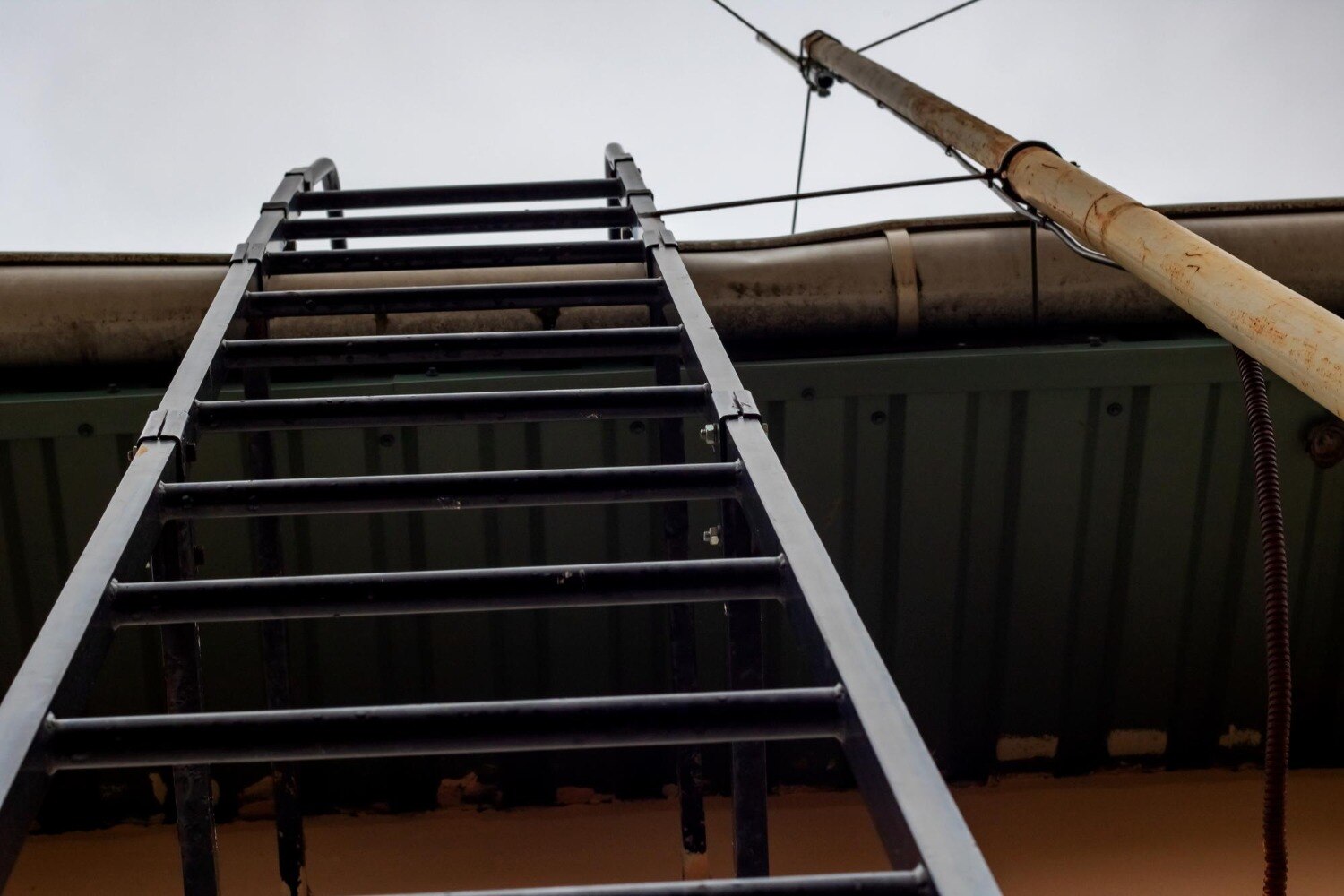
The right buyer is not defined by tray width or the word “industrial”; it is defined by cable quantity, route length, support conditions, environment, and future expansion. By checking those factors, you can decide whether a GI ladder tray suits your project, when another containment method is safer, and what information to give a supplier before requesting a quotation.
Key takeaways
- Use GI ladder trays for long runs carrying multiple or heavy power cables.
- Choose a finish based on humidity, chemicals, coastal salt, and indoor exposure.
- Prove fit with cable schedules, tray dimensions, load calculations, and support spacing.
- Include drawings, material specifications, inspection documents, and installation details in the purchase package.
Which Mumbai projects are a good fit for GI ladder cable trays?
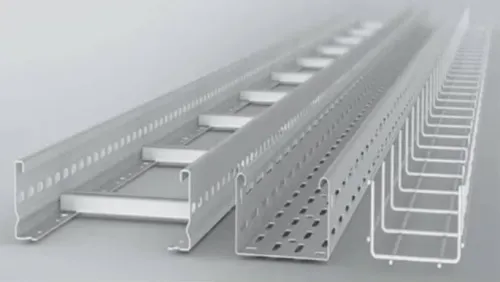
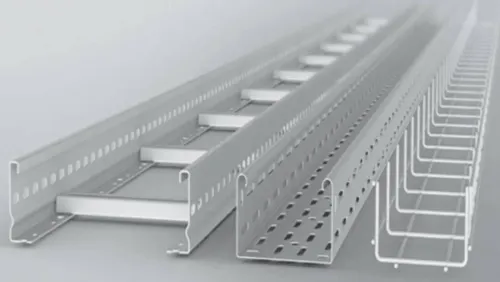
Factories, process plants, warehouses, commercial-industrial buildings, data centres, utilities, substations, infrastructure contractors, and electrical installation contractors are good candidates for GI ladder trays when a route carries multiple cables over long or distributed runs. Side rails and rungs provide strong, accessible support for heavy power cables.
Control, instrumentation, and communications cables also fit when their diameter, weight, separation, and support needs match the rung spacing. Small cables can sag between widely spaced rungs.
| Route condition | Why a ladder tray fits | Weaker alternative or caution |
|---|---|---|
| Long horizontal run | Ventilation, visible cable identification, and quick access for ties and cleats | Conduit becomes difficult to install and inspect |
| Vertical riser or cable drop | Open construction simplifies routing | Add clamps, cleats, and intermediate supports to stop cable movement |
| Future cable additions | You can inspect, extend, and rearrange cables without opening a duct | A closed duct makes later changes slower |
| One or two lightweight indoor cables | Minimal cable load and short distance | Conduit or a small perforated tray uses less steel and fewer fittings |
Choose ladder construction when the route needs expansion and maintenance access. Do not use one wide tray to ignore segregation between power, control, instrumentation, intrinsically safe, fire-alarm, and communication circuits.
When requesting a cable tray manufacturer in Mumbai for industrial projects, provide the cable schedule, cable diameters and weights, route profile, support spacing, bends, vertical sections, exposure, and spare-capacity requirement—not only the project name or tray width.
When should you choose a ladder tray over other cable supports?
Choose a ladder tray when ventilation, drainage, inspection, and fast cable access matter more than continuous bottom support.
| Option | Choose ladder tray when | Prefer another support when |
|---|---|---|
| GI perforated tray | Heat dissipation, drainage, visual inspection, and cable-tie access matter | Small cables need continuous bottom support |
| Solid-bottom tray | The route carries ventilated power cables, outdoor cables, or cables added frequently | Continuous containment or shielding matters |
| Conduit | The route contains many large cables, branches, bends, or requires regular inspection | The route has only one or two small cables |
| Wire mesh tray | Heavy cables, long spans, vertical runs, and stronger side rails matter | Low weight and rapid handling matter most |
| Cable trench | You want an above-floor route independent of civil drainage, covers, and trench access | Site rules mandate a trench for security, layout, or physical protection |
Do not use a ladder tray for fine instrumentation or small control cables that sag between widely spaced rungs. Select smaller rung spacing, a perforated or solid-bottom tray, or a separate support with a suitable base.
It is also the wrong choice where continuous cable shielding is required, aggressive chemicals demand stainless steel or another corrosion system, or a mandated trench cannot be replaced. Separate power, control, instrumentation, intrinsically safe, fire-alarm, and communication circuits when project rules require it; one wide tray does not remove segregation.
For a GI ladder cable tray in Mumbai, choose it for long, ventilated routes with heavy cables and future additions—not for every cable run.
Which Mumbai exposure conditions change the tray material or finish?
A GI ladder cable tray in Mumbai needs an exposure decision before you choose its finish. Record whether each run is indoors, outdoors, under a roof, on a rooftop, inside a utility yard, or near a marine or chemical source.
| Exposure condition | Main corrosion risk | Finish or material to compare |
|---|---|---|
| Coastal or marine location | Salt-laden air attacks zinc and exposed steel | Heavier hot-dip galvanizing, duplex coating, stainless steel, aluminium, or coated steel |
| Monsoon route or open yard | Standing water and repeated wetting | Hot-dip galvanizing after fabrication or a specified duplex system |
| Rooftop | Rain, sunlight, heat, and wind-driven salt | Corrosion assessment before selecting galvanized or coated steel |
| Indoor plant room | Persistent humidity and condensation | Suitable galvanized finish, with maintenance access |
| Chemical or process area | Acidic, alkaline, solvent, or industrial fumes | Stainless steel or a coating system rated for the identified atmosphere |
Ask whether the tray is electro-galvanized or pre-galvanized steel, or hot-dip galvanized after fabrication. The process changes zinc thickness, cut-edge treatment, appearance, and corrosion performance. “GI” alone is not a sufficient purchase description.
Obtain a corrosion assessment for exposed outdoor, rooftop, or marine runs. Base the selection on atmosphere, maintenance access, dissimilar-metal contact, and the consequence of corrosion. Deburr every field-cut edge and apply the repair system named in the galvanizing specification.
A standard indoor finish can fail early in a coastal utility yard, while stainless steel is unnecessary in a clean, dry electrical room.
How do you prove that the tray fits the cables and support structure?
Prove the fit with a cable schedule and a load/span check, not a catalogue width. Record each cable’s outside diameter, weight per metre, minimum bending radius, quantity, circuit type, and proposed route.
Calculate usable fill from the actual diameters, then add room for power-to-control separation, cleats or ties, bend transitions, and the specified future reserve. Nominal width is not usable cable area. At bends, tees, reducers, and risers, preserve the largest cable’s minimum bending radius instead of forcing the bundle into the straight-run width.
- Select tray width and height from the cable arrangement and route geometry.
- Add cable weights per metre to calculate distributed load, then mark concentrated loads at splice plates, drops, bends, and vertical supports.
- Compare the manufacturer’s tested load table with its stated working load and permissible load. Confirm the safety factors, deflection limit, tray width, steel thickness, rung spacing, and support span used in the test.
- Do not assume a 300 mm tray has a particular load rating. Select support spacing from tested or calculated load/span data, then check deflection at that exact spacing.
- Verify cantilever arms, threaded rods, anchors, building steel, concrete, roof structure, vibration conditions, and vertical supports as one system.
A cable support manufacturer Mumbai buyer should request these calculations and the complete fixing method. The tray can pass its own rating while an anchor, structural attachment, or vertical support fails.
What must a Mumbai buyer include in the purchase and installation package?
Put every component and installation requirement on the purchase order: request straight lengths, tray width and height, steel thickness, rung spacing, bends, tees, crosses, reducers, risers, covers, splice plates, supports, fasteners, finish, load/span tables, and inspection or test documents.
- Attach route drawings and cable schedules showing cable diameter, weight, circuit type, required spare capacity, cable segregation, support spacing, exposure classification, and the fixing method. Check compatibility with building steel, concrete, roof structure, vibration conditions, anchors, cantilever arms, threaded rods, and vertical supports.
- Specify deburring and approved coating repair after every field cut. Omit fittings and installers may fabricate bends on site, damaging the coating and changing the tested load arrangement. Inspect every cut edge so it cannot abrade cable jackets.
- At fire-rated walls and floors, name a compatible tested firestop system for the tray and installed cables. A GI cover does not restore a penetration’s fire rating. Specify bonding continuity across joints, bonding jumpers where joints do not provide reliable continuity, and connection to the site earthing network under the project installation rules. Treat the tray as mechanical support, not automatically as protective earth; it replaces a protective earthing conductor only when the design and applicable rules explicitly permit it.
An industrial cable tray supplier Mumbai or cable support manufacturer Mumbai should provide this evidence rather than quote width alone. Evaluate ELECTROTECH INDUSTRIES against load/span data, compatible fittings and supports, galvanizing details, documentation, and its ability to match the actual route and exposure.
Related product
 | GI Ladder Cable Tray Manufacturer in Pune – Electrotech Industries Electrotech Industries is a leading manufacturer and supplier of high-quality GI Ladder Cable Trays,... View product → |
Frequently asked questions
Which Mumbai projects are a good fit for GI ladder cable trays?
Factories, process plants, warehouses, commercial-industrial buildings, data centres, utilities, substations, and infrastructure projects suit GI ladder trays when routes carry multiple cables over long or distributed runs.
When should you choose a ladder tray over other cable supports?
Choose a ladder tray when heavy or grouped power cables need strong support, ventilation, accessible routing, and easier inspection. Use solid-bottom or enclosed systems when containment, shielding, or small-cable support takes priority.
Which Mumbai exposure conditions change the tray material or finish?
Check indoor humidity, coastal salt, chemical vapours, washdown areas, and outdoor exposure before selecting the finish. These conditions can require a more corrosion-resistant coating or material than standard galvanised steel.
How do you prove that the tray fits the cables and support structure?
Submit the cable schedule, cable diameters and weights, tray width and depth, fill calculation, span and load calculation, support details, bend clearances, and route drawings for review.
What must a Mumbai buyer include in the purchase and installation package?
Specify tray type, dimensions, steel grade, galvanising or coating requirement, rung spacing, accessories, splice plates, bends, reducers, covers, supports, earthing provisions, drawings, inspection records, and installation instructions.
Keywords