A rod that performs well in one part of Shikrapur can underperform where soil is rocky, seasonally dry, saline, chemically contaminated, or filled with construction debris. You will be able to assess the site, compare electrode materials, specify the complete earthing system, and verify a supplier’s evidence before purchasing.
Key takeaways
- Test soil resistivity before selecting an earthing rod material.
- Use copper-bonded steel when you need strength with a corrosion-resistant surface.
- Specify rods, clamps, backfill, inspection points, and test requirements together.
- Request material certificates, dimensions, coatings, and installation guidance from suppliers.
What Makes Soil Harsh for an Earthing Electrode?
An electrode faces harsh soil when the ground either resists current flow or attacks the metal. High soil resistivity increases earth resistance; acidic or saline moisture accelerates corrosion. Seasonal drying can turn a low-resistance reading into a poor dry-season result.
Look for these warning signs before selecting a rod:
- Dry, compacted, or rocky strata that limit contact area and driving depth
- Black cotton soil that swells when wet and shrinks during drying, stressing joints
- Construction backfill containing rubble, ash, concrete fragments, or unknown fill
- Saline soil near drainage, wastewater, or chemical storage areas
- Acidic or industrially contaminated soil that can damage steel or copper
- Buried dissimilar metals, such as copper connected directly to galvanized steel, creating galvanic corrosion
Measure the site rather than inferring conditions from the Shikrapur location. Use the four-terminal Wenner method, increasing electrode spacing to investigate progressively deeper soil layers. Record soil moisture, groundwater depth, temperature, and the date, then repeat measurements during wet and dry seasons when the installation serves critical equipment.
A single earth-resistance reading tests the installed arrangement; it does not reveal the soil profile.
Ask an earthing rod manufacturer in Shikrapur to match the rod, coating or cladding, coupler, and installation method to those measurements. A locally available rod is not automatically suitable for harsh ground. Confirm its material construction, coating thickness or copper-bond continuity, connector compatibility, and corrosion protection before approval.
Measure Soil Resistivity Before Choosing the Rod Material
A single earth-resistance reading cannot reveal the soil profile. Use the four-terminal Wenner method: place four equally spaced probes in a straight line, record resistance, and calculate soil resistivity from the spacing.
Increase the spacing to investigate deeper layers, then repeat the survey after dry and wet periods because groundwater and seasonal moisture can change the result.
Record these supporting measurements before approving a grounding rod in Shikrapur:
- Soil resistivity at each probe spacing, reported in ohm-metres
- Soil pH and chloride or sulphate content where corrosion risk is suspected
- Moisture condition, groundwater depth, and the presence of black cotton soil, rock, construction backfill, or industrial contamination
- Locations of buried copper, GI, steel, or other dissimilar metals that could create galvanic corrosion
Use the results to screen the electrode material, not to claim that one material fits every site.
| Material | Field conditions supporting selection | Conditions requiring caution |
|---|---|---|
| Solid copper | Low-to-moderate resistivity and strong corrosion resistance requirement | Avoid direct contact with buried galvanized steel unless the connection is a tested bimetallic type |
| Copper-bonded steel | High mechanical driving demand with a continuous, adequately thick copper bond | Reject damaged cladding; exposed steel can corrode rapidly |
| GI | Moderate soil chemistry, accessible inspection, and cost-sensitive installations | Acidic, saline, or persistently wet soil can consume the zinc coating |
| Stainless steel | Chemically aggressive or saline soil where service life outweighs cost | Confirm grade suitability and driving strength; high resistivity still requires design attention |
A local earthing rod supplier Shikrapur should provide the resistivity basis, metal declaration, coating or cladding details, and connector compatibility. Availability alone does not prove suitability.
Compare Copper, Copper-Bonded Steel, GI, and Stainless Steel
For most harsh-soil sites, copper-bonded steel offers the best balance of conductivity, mechanical strength, corrosion resistance, service life, and cost. Confirm that choice against measured soil resistivity, moisture variation, acidity, salinity, and industrial contamination—not the supplier’s location or the label “copper rod.”
| Option | Strengths | Limitations and suitable use |
|---|---|---|
| Solid copper | Highest conductivity; excellent resistance to many soils; long service life when joints are protected | Expensive, soft, and vulnerable to bending or theft; avoid direct connection to buried dissimilar metals without corrosion control |
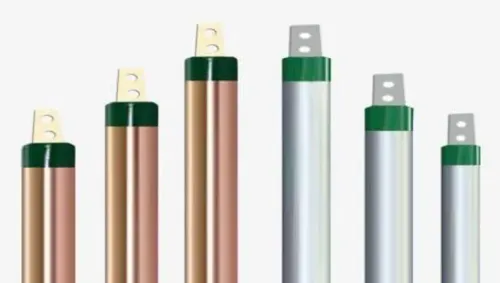
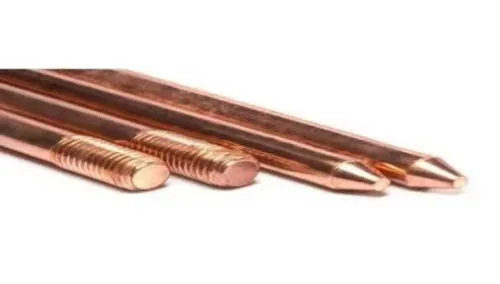
| Copper-bonded steel | Steel core withstands driving; continuous copper layer provides good conductivity and corrosion protection; usually the strongest value choice | Performance depends on bond continuity and cladding thickness; reject rods with cuts, exposed steel, or an unverified coating |
| GI steel | Strong, widely available, and economical; zinc coating protects fresh steel | Saline, acidic, chemically contaminated, or permanently wet soil can consume the zinc; specify hot-dip galvanizing and avoid it where rapid coating loss is expected |
| Stainless steel | Strong and highly resistant to chloride, acidic, and wet environments when the grade is suitable | Lower conductivity than copper, higher cost, and grade selection matters; use a documented grade where GI or copper-bonded steel will corrode quickly |
For earthing products near shikrapur, request the actual construction, core material, copper-cladding or zinc-coating thickness, diameter, and material certificate. A single resistance reading cannot select the metal; use the site’s Wenner four-point resistivity results and soil chemistry.
Also match the rod to its clamp. A corrosion-resistant electrode can fail at an incompatible buried joint.
Specify the Complete Electrode System, Not Just Rod Length
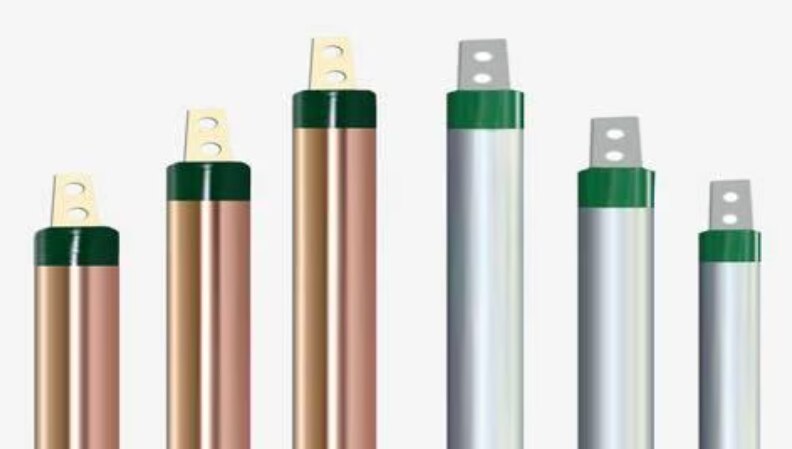
A rod length does not prove the design objective; specify the complete electrode system against measured soil resistivity, fault current, target resistance, and service life. For a grounding rod shikrapur installation, document the rod’s material, diameter, steel core, copper cladding or GI coating thickness, tip, thread, coupler, and driving head—not merely “3 m rod.”
| System element | Specify | Why it matters |
|---|---|---|
| Rod | Material, diameter, length, coating or cladding thickness, and tolerances | Controls corrosion life, mechanical strength, and contact area |
| Connection | Rated clamp, conductor size, compatible metals, tightening torque, corrosion protection, and test link | A poor buried joint can fail while the rod remains intact |
| Multiple rods | Spacing, parallel or linear orientation, interconnection conductor, and inspection chamber | Overlapping resistance areas prevent resistance falling directly in proportion to rod count |
| Backfill | Bentonite, conductive concrete, or chemical backfill; permanent conductivity, moisture behaviour, and compatibility | Salts or aggressive chemicals can accelerate rod and clamp corrosion |
| Inspection | Accessible test link, chamber, labels, photographs, continuity results, and earth-resistance readings | Enables verification and future retesting |
- Use a four-terminal Wenner survey with varied electrode spacing; include seasonal moisture and groundwater changes in the design.
- Confirm that the clamp accepts the actual electrode and conductor materials, remains mechanically secure, and is reachable for inspection where practicable.
- Reject unspecified backfill. Obtain its product data, chemical compatibility statement, installation quantity, and approval under the project specification.
- Record as-built rod locations, depth, spacing, connections, backfill, test readings, and batch details. ISO 9001 certification does not replace a material declaration or rod-specific test report.
What to Request from an Earthing Rod Supplier in Shikrapur
Do not approve a rod from an earthing rod supplier in Shikrapur on length and price alone. A locally stocked product may come from another factory, so request the manufacturer’s documents and match every item to the electrode system designed for your measured soil conditions.
- Batch-specific test certificate with batch number, rod diameter, length, tolerances, steel grade, copper composition, and coating or cladding thickness.
- Material declaration stating hot-dip galvanized steel, copper-clad steel, solid copper, or stainless steel; reject “copper rod” without construction details.
- Connector data identifying clamp material, thread, coupler, driving head, and a listed or tested bimetallic connection for copper-to-GI joints.
- Installation drawing specifying rod spacing, orientation, conductor size, joint preparation, backfill, inspection chamber, and test link.
- Factory quality records, installation instructions, and a corrosion or coating test report. ISO 9001 alone does not prove a particular rod’s earth-resistance performance.
Evidence to compare before approval:
| Evidence | What it confirms | What failure means |
|---|---|---|
| Batch certificate | The supplied rod matches the declared construction | Untraceable material |
| Coating report | Cladding or zinc thickness is documented | Steel may be exposed after driving |
| As-built record | Actual depth, spacing, joints, and backfill | Design cannot be verified |
| Earth-test report | Installed resistance was measured by a named method | A passing claim lacks proof |
Ask for installation photographs before backfilling and signed test results after interconnection. ELECTROTECH INDUSTRIES should be assessed by the same evidence standard as any earthing products near Shikrapur or earthing rod manufacturer in Shikrapur.
Related products
 | Earthing Rod Manufacturer in Pune – Electrotech Industries Electrotech Industries is a leading manufacturer and supplier of high-performance earthing rods,... View product → |
 | Copper Earthing Rod Manufacturer in Pune – Electrotech Industries Electrotech Industries is a trusted manufacturer and supplier of copper earthing rods, designed to... View product → |
Frequently asked questions
What makes soil harsh for an earthing electrode?
High soil resistivity restricts current flow, while acidic or saline moisture attacks metal. Seasonal drying can also increase earth resistance.
How should you choose between copper, copper-bonded steel, GI, and stainless steel rods?
Compare soil chemistry, resistivity, mechanical strength, corrosion exposure, installation method, and the required service life before selecting the material.
What should an earthing electrode system specification include?
Specify rod material and diameter, rod length, couplers, clamps, conductor size, inspection access, backfill, installation depth, and testing requirements.
What should you request from an earthing rod supplier in Shikrapur?
Request dimensions, coating or material details, batch traceability, test certificates, compatible clamps and couplers, installation instructions, and warranty terms.
Keywords