Pune’s monsoon exposes cable routes to driving rain, high humidity, mud, dust, standing water and repeated wet-dry cycles. By the end, you will know when an open ladder tray is suitable, how to detail drainage and supports, and which coating, cable-entry and inspection information to demand from a manufacturer.
Key takeaways
- Classify wind-driven rain exposure before selecting an open ladder tray.
- Use slope, sealed entries and drainage details to prevent standing water.
- Ask for galvanizing records, coating thickness and steel grade documentation.
- Inspect joints, supports, glands and low points before and during monsoon.
How Pune monsoon conditions damage an outdoor cable route
Driving rain reaches horizontal routes from above and sideways, forcing water through tray openings, splice gaps and cable clearances. On vertical routes, it runs down rungs, cables, supports and building faces before entering glands, junction boxes or wall penetrations. Cable routing rain in Pune therefore requires exposure classification before you select a tray.
- Fully exposed: direct rain, wind-driven spray and standing water at low points.
- Under a canopy: reduced rainfall, but wind can drive spray onto the route.
- Indoors: humidity and condensation still matter near open doors or unsealed walls.
- Near a washdown area: repeated hose or cleaning-water exposure.
- Inside a splash zone: water rebounds from floors, equipment, vehicles or walls.
High humidity keeps steel damp, while wet-dry cycles concentrate salts and accelerate corrosion at cut edges, welds, fasteners, anchors and splice plates. Mud, leaves and dust can block drainage gaps; bird nests, droppings and rodent debris foul cables, hold moisture against metal and obstruct inspection.
Assess the tray, supports, joints, cable glands, junction boxes and building penetrations as one installation. A galvanized ladder tray monsoon specification is incomplete if its carbon-steel supports corrode or its enclosure admits water.
Use IEC 61537 as the cable-tray-system reference for mechanical performance, electrical continuity and resistance to environmental influences. Compliance does not replace site-specific design: confirm wind, contamination, drainage, access, cable weight, support spacing and the required ingress protection for every connected component.
When an open ladder tray is the right choice—and when it is not
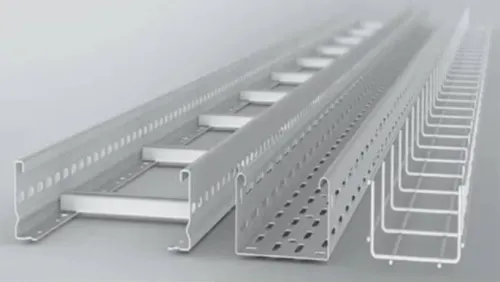
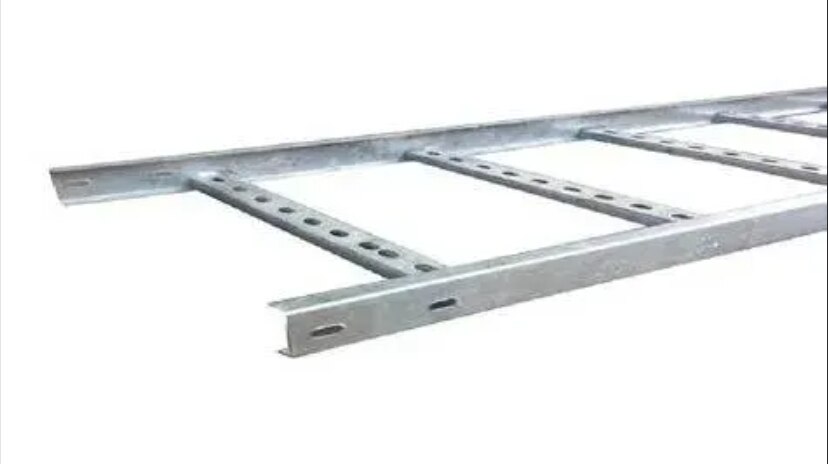
An open ladder tray suits a fully exposed monsoon route when drainage, ventilation and cable retention matter more than protection from falling objects or impact. Its rungs let rain pass through instead of collecting in a continuous trough, while leaving cables visible for inspection and maintenance.
| Option | Main advantage | Use during monsoon |
|---|---|---|
| Open ladder tray | Drainage, ventilation and access | Exposed power or larger cable routes with controlled debris |
| GI perforated tray | More support for smaller cables | Routes needing a closer base and moderate splash control |
| Solid-bottom tray | Blocks upward splash and retains small cables | Areas where water or debris can reach from below |
| Covered tray | Adds protection from falling debris and splash | Outdoor routes below trees, structures or active work |
| Conduit | Enclosed mechanical and water protection | Small control cables, washdown areas, or heavy bird and rodent contamination |
| Enclosed trunking | Continuous enclosure and orderly segregation | Small cable groups needing direct-water and impact protection |
Ladder openings can let small, flexible or closely spaced control cables fall through. Vertical or steep runs also need cleats, clamps or a purpose-designed cover sized for the cable and fault forces; the tray is not a cable-retention system by itself.
Use a covered or solid-bottom tray under falling debris or where splash protection is needed. Choose conduit or enclosed trunking for washdown areas, heavy contamination, and routes exposed to direct water or impact.
A GI ladder cable tray in Pune still needs its supports, fasteners and entries specified as part of one installation. For any ladder cable tray monsoon design, request the load-versus-span table, allowable deflection, support spacing and splice-load data; width alone proves nothing about capacity.
How to stop rainwater collecting at joints, bends and low points
1. Set each horizontal run with a small, continuous fall toward a deliberate discharge point; do not let the route rise and fall between supports. For cable routing rain in Pune, avoid placing splice plates, cable crossings or tray ends at the lowest point.
2. Lay bends and reducers so their rung openings remain open to the fall, rather than creating a pocket on the inside radius. Turn vertical transitions so water leaves the horizontal section before cables change direction, and provide a drain or open-ended discharge at any unavoidable low point.
3. Place supports close enough to maintain the designed slope without sagging. Use stand-offs or brackets that do not form shelves beneath the tray; dirt trapped on a support holds moisture against steel and blocks drainage. Keep tray ends clear, and never cap an end unless the cap includes a drainage path.
4. Use couplers, fasteners and splice plates matched to the tray system. On long outdoor runs, install the specified expansion provisions and leave movement at building or structural expansion joints; rigidly bridging every joint transfers movement into the tray, anchors or cables.
5. Terminate cables with weather-suitable glands, junction boxes and enclosures rated for the exposure. Face entries downward where practical, or form a drip loop before entry, because an open ladder tray cannot make a poor gland watertight.
6. Seal building penetrations against driven rain and insects, but keep the tray’s designed drainage route outside the seal. Include these details in the “ladder cable tray manufacturer in pune monsoon” specification, not as an assumption based on open sides alone.
What to ask a ladder cable tray manufacturer in Pune about galvanizing
Do not approve a “GI ladder cable tray in Pune” from the word GI alone. Ask the ladder cable tray manufacturer in Pune to identify the process: continuously or pre-galvanized sheet, or hot-dip galvanized after fabrication. Post-fabrication dipping coats accessible fabricated edges and weld areas more comprehensively; drilling, cutting or welding afterward exposes bare steel.
Require these details in the quotation and drawing:
- Zinc coating designation, coating mass or average thickness, and the substrate steel thickness
- Cut-edge treatment, including the repair method for site-drilled or damaged areas
- Tray, support and fastener finishes separately; confirm the fastener coating is compatible with the tray
- Intended corrosivity environment, such as sheltered indoor, canopy-protected or fully exposed monsoon service
- Load, span and installation limits alongside the finish specification
Ask for coating inspection records, batch identification and relevant salt-spray test evidence. Salt-spray hours compare test performance; they do not directly predict service life in Pune, where wet-dry cycling, pollutants and drainage control also matter.
For damaged hot-dip coatings, specify an ASTM A780-compatible zinc-rich repair system. Ordinary enamel or unverified aluminium paint is not an equivalent galvanizing repair. A ladder cable tray manufacturer in Pune monsoon specification must cover the entire installation, not just the tray.
ELECTROTECH INDUSTRIES is a Pune-based manufacturer to contact for a written finish, load and installation specification rather than accepting “GI” as sufficient.
Related product
 | GI Ladder Cable Tray Manufacturer in Pune – Electrotech Industries Electrotech Industries is a leading manufacturer and supplier of high-quality GI Ladder Cable Trays,... View product → |
How to verify the installation before and during every monsoon
1. Confirm the tray and supports are rated for the installed cable weight, support span and actual loading. Check anchors, cut edges, welds and splice plates for red rust; white rust is a dull, powdery zinc corrosion caused by wet storage or poor packaging, not exposed steel.
2. Check dissimilar metals at tray, fasteners and supports. Isolate incompatible metals with suitable washers or coatings, or confirm an intentionally matched material system.
3. Test electrical continuity across every joint and splice plate, including painted or coated contact points. Verify bonding jumpers where required and the connection to the site earthing system; never count the metallic tray automatically as the protective earth or bonding conductor.
4. Inspect cleats, clamps, cable glands, junction boxes and panel entries for the ingress-protection rating required by the exposure. A weather-resistant tray cannot compensate for an unsuitable gland or enclosure.
5. Before heavy rain, remove leaves, mud and construction debris, clear drainage points, and check for pockets around supports and low points. Tighten or replace corroded fasteners, then repeat bonding checks after any modification. This is the practical baseline for ladder cable tray monsoon inspections and cable routing rain in Pune.
6. Keep these purchase documents: approved drawings, load and support-spacing data, expansion-joint details, coating designation, cut-edge repair method, inspection and continuity records, and the named maintenance responsibility.
Frequently asked questions
How does Pune monsoon rain damage an outdoor cable route?
Driving rain enters tray openings and splice gaps, while water running down vertical routes can reach glands, junction boxes and wall penetrations. Inspect the entire route, not only the tray surface.
When is an open ladder cable tray suitable during monsoon?
Use an open ladder tray when the route has controlled rain exposure, adequate cable clearances and protected equipment entries. Choose a covered or enclosed system where wind-driven rain can directly wet sensitive cables or enter equipment.
How do you stop rainwater collecting at ladder tray joints and low points?
Set the route to drain, avoid unplanned sags, and detail bends, splice plates and transitions so water cannot remain trapped. Seal or protect cable entries at glands, junction boxes and wall penetrations.
What should you ask a ladder cable tray manufacturer in Pune about galvanizing?
Ask for the steel grade, galvanizing method, coating-thickness records, batch traceability and repair procedure for cut or damaged areas. Confirm that fasteners, splice plates and supports have compatible corrosion protection.
How do you verify a ladder cable tray installation before and during monsoon?
Check tray slope, supports, splice tightness, cable clearance, drainage paths, corrosion damage and every gland or penetration before the rains. During monsoon, inspect low points and equipment entries after heavy rain for ponding, leakage and water ingress.
Keywords